
A Suppressed TSH Is Not "Just a Number"
Follow on your favorite platform


Sarah had Hashimoto's. She was on levothyroxine. Her TSH was normal. And she still felt tired, foggy, like herself at about 70%.
Online, she found a confident voice with a clear answer: the endocrinologists were too conservative, her suppressed TSH didn't matter, and desiccated thyroid plus high-dose T3 would finally optimize her. She felt better at first.
Months later, at 51, she had a stroke, driven by an arrhythmia from too much thyroid hormone.
Too often, women with thyroid symptoms are told one of two things:
"Your labs are normal, there's nothing to do."
Or, from the internet, "Your doctor is keeping you sick. Here's what you really need."
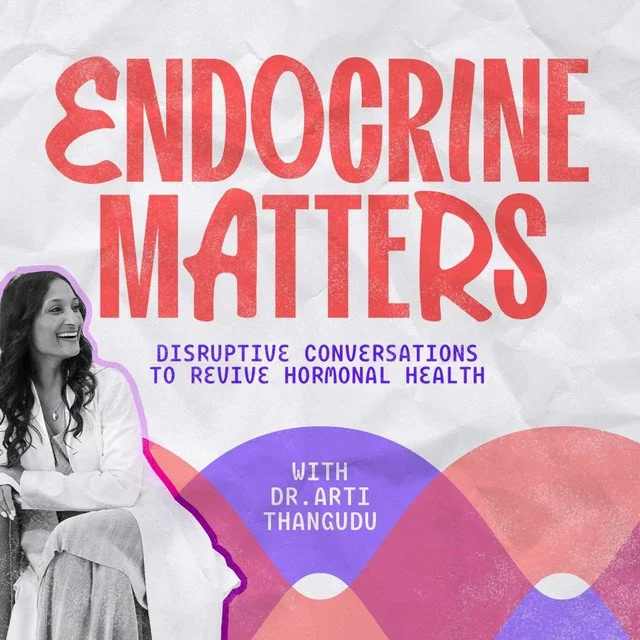
Both can be dangerous. In this episode of Endocrine Matters, I break down why thyroid disease is such fertile ground for misinformation, and how to tell information that empowers you from information that puts you at risk.
This was such an important topic to bring to the podcast. If you prefer to watch or listen, you can catch the full episode on my channel.
What Makes Thyroid Misinformation So Convincing
The most dangerous health misinformation is not a lie. It's a partial truth, a real concept taken out of context, overgeneralized, and applied to everyone. Thyroid disease is fertile ground for this because it is genuinely complex, genuinely undertreated in some people, and genuinely dismissed in some clinics.
When someone feels unheard and then meets a confident voice that says "I see you, and here's the answer," that is powerful. I understand the pull.
Let me show you where the kernels of truth get stretched into something harmful.
T3 and Desiccated Thyroid: The Kernel of Truth, and the Overgeneralization
The truth: levothyroxine is the standard treatment recommended by the American Thyroid Association and the American Association of Clinical Endocrinology.
A subset of patients, particularly those who've had a total thyroidectomy, may not convert T4 to active T3 efficiently, and some feel better on combination T4/T3 therapy. The ATA has discussed combination therapy as valid for select patients using shared decision-making.
The overgeneralization: everyone should be on desiccated thyroid, and levothyroxine is "toxic."
That ignores that desiccated thyroid contains more T3 relative to T4 than your own thyroid makes, and delivers it in a pulse instead of a steady level.
That creates cardiovascular risk, especially in older women.
The American Geriatrics Society lists desiccated thyroid as potentially inappropriate in adults 65 and older, and the FDA has logged hundreds of adverse event reports tied to these products.
None of this means it's never appropriate.
It means it requires individualized judgment, not a blanket switch.
The Free T3 and Reverse T3 Obsession
The truth: standard testing uses TSH and sometimes free T4, and in certain situations free T3 adds useful information.
The overgeneralization: everyone needs a routine "full panel" with free T3, reverse T3, and antibodies, and reverse T3 is a hidden key the mainstream ignores. In reality, ATA guidelines are explicit that TSH is the most sensitive marker for the vast majority of patients, and reverse T3 has limited clinical utility in standard hypothyroidism management.
Ordering big panels with no indication and treating a low free T3 in isolation is a pathway to overtreatment, which carries documented risks: atrial fibrillation, bone loss, and increased cardiovascular mortality.
"Thyroid Support" Supplements and the Accountability Gap
Many "thyroid support" products contain compounds with real pharmacologic effects: high-dose iodine or kelp, ashwagandha, and others.
They are not always gentle.
And the person selling them usually has no clinical accountability for what happens to you afterward. A physician who prescribes a medication takes responsibility for your outcome. A supplement seller does not.
That asymmetry should matter to you.
What Happens When Thyroid Disease Goes Really Wrong
Most online thyroid content comes from people who see one slice of thyroid disease: the functioning, optimization-seeking outpatient. I've seen the rest of the picture, and it changes the conversation:
Myxedema coma: severe, uncontrolled hypothyroidism with a high mortality rate. I've seen it in patients who stopped levothyroxine because they were told it was unnecessary.
Thyroid storm: life-threatening hyperthyroidism that can be triggered by overtreatment, including from supplements or desiccated thyroid taken without monitoring.
Iatrogenic atrial fibrillation: an arrhythmia from excess thyroid hormone that significantly raises stroke risk. The research on over-suppressed TSH documents this clearly.
Thyroid hormone induced osteoporosis: excess thyroid hormone accelerates bone loss, which is especially dangerous in postmenopausal women.
How to Vet Thyroid Advice Online: 5 Questions
Are they board certified in a relevant specialty? Endocrinology certification is roughly 12 years of training.
Did they complete residency and fellowship? The degree alone does not convey clinical experience.
Do they profit from what they recommend? "Natural" does not mean unconflicted.
Are they sharing evidence or experience? "I've helped hundreds of patients" is not the same as trial data.
Are they helping you think, or provoking fear? Fear sells. Evidence-based care is less thrilling and far less likely to land you in the hospital.
Women Have Been Dismissed, and That Deserves Honesty
I want to be clear about something.
Women with thyroid disease have been dismissed, and the research is not subtle. Women's reports of fatigue, brain fog, weight gain, and mood changes are more likely to be attributed to anxiety or lifestyle than the same symptoms in men. So when a woman is dismissed and then finds a confident alternative online, the appeal is obvious.
I'm not defending the system that dismissed her.
I'm saying being failed by one inadequate system does not make a charismatic alternative the right answer.
You deserve care that is both attentive and evidence-based.
Those can coexist.
What Good Thyroid Care Actually Looks Like
A thorough workup starts with a real history, not a battery of tests.
Standard testing is TSH and sometimes free T4.
If Hashimoto's is suspected, TPO antibodies are appropriate.
Reverse T3 has narrow utility, and ultrasound is not a routine screen.
Levothyroxine is first-line, one of the most studied medications in medicine, safe, affordable, and effective for most people.
For those still symptomatic on optimally dosed levothyroxine with other causes ruled out, a monitored trial of combination T4/T3 can be discussed.
You should leave a thyroid appointment knowing your diagnosis, your treatment and why, your goals, how you'll know it's working, and when you'll be rechecked.
The Bottom Line
A suppressed TSH is not "just a number," and "natural" is not automatically safer.
Being dismissed is real, and the answer to it is better medicine, not a confident stranger online.
You deserve care that is both compassionate and competent. Those are the same value.
📍 Still have questions?
💬 Contact us and we'll be happy to help!
💌 Or join our newsletter to stay informed: Sign up here
FAQs
Is a suppressed TSH dangerous? It can be. A suppressed TSH often means there's too much thyroid hormone in your system, which raises the risk of atrial fibrillation, bone loss, and cardiovascular problems. It's not a number to ignore.
Is desiccated thyroid (like Armour) safer because it's "natural"? Not necessarily. It contains more T3 relative to T4 than your own thyroid produces and delivers it in a spike. The American Geriatrics Society lists it as potentially inappropriate for adults 65 and older. It can be right for some patients, but it requires individualized judgment and monitoring.
Do I need a full thyroid panel with reverse T3 and free T3? For most people, no. TSH is the most sensitive marker for the majority of patients, and reverse T3 has limited clinical utility in standard hypothyroidism management. Routine full panels often lead to overtreatment rather than answers.
Are "thyroid support" supplements safe? Many contain compounds with real effects on thyroid function, like high-dose iodine, kelp, or ashwagandha. They aren't always gentle, and the seller carries no accountability if they harm you. Talk to a physician first.
My TSH is normal but I still feel terrible. What should I do? Your symptoms are real, and "your labs are fine" isn't the end of the conversation. A good workup looks for other causes (iron, sleep, perimenopause, mood) and whether your TSH is optimized for you. If you remain symptomatic on well-dosed levothyroxine and other causes are ruled out, a monitored trial of combination T4/T3 can be discussed.
How can I tell if someone giving thyroid advice online is qualified? Ask five things: Are they board certified in a relevant specialty? Did they complete residency and fellowship? Do they profit from what they recommend? Are they sharing evidence or anecdote? Are they helping you think, or provoking fear?
