
Thyroid Care Is Not a Battlefield: Rebuilding Trust Between Patients and Endocrinologists
Follow on your favorite platform



Thyroid disease should not feel like a fight.
And yet, for many patients, that’s exactly what it has become.
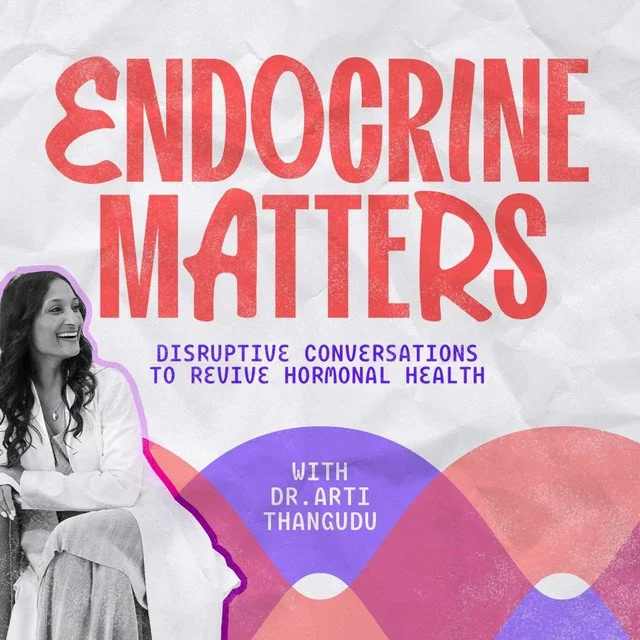
In a recent episode of the Endocrine Matters Podcast, Dr. Arti Thangudu sat down with fellow board-certified endocrinologists Dr. Vidhya Illuri and Dr. Munira Mehta to have an honest conversation about why patients are walking away from mainstream thyroid care — and what it will take to rebuild trust.
This isn’t about who is right or wrong.
It’s about what patients deserve.
When “Your Labs Are Normal” Isn’t Enough
One of the most common experiences thyroid patients describe is feeling dismissed.
They come in exhausted, foggy, discouraged — and leave with:
“Your TSH looks fine. Stay on the same dose.”
While that statement may be medically accurate, it often doesn’t address the person sitting in front of us.
Patients frequently arrive at appointments with low expectations. Many have already seen multiple providers. What changes the trajectory of that visit isn’t necessarily a new medication — it’s being heard.
Taking time to ask about:
Sleep
Stress
Nutrition
Menstrual cycles
Mental health
Life circumstances
These conversations often break down walls. Trust begins when patients feel validated.
The System Problem: Time Is the Missing Ingredient
Traditional insurance-based models often limit visits to 10–15 minutes. In that time, physicians are expected to:
Review labs
Confirm a diagnosis
Adjust medications
Document extensively
Stay on schedule
When thyroid labs are normal, the visit can quickly become:
“This isn’t a thyroid issue. Please follow up with someone else.”
But symptoms don’t disappear just because TSH is normal.
Fatigue, dry skin, low mood, weight changes — these are real experiences. They deserve investigation, not dismissal.
Why Patients Turn to Alternative Medicine
Many patients turn to alternative or functional medicine providers because they are offered something they’ve been missing: time.
Longer visits allow for:
Detailed storytelling
Deeper lifestyle discussions
A sense of partnership
Time and compassion matter.
But longer visits alone do not guarantee safe or evidence-based care.
The Risk of Oversimplification
A common message patients hear is:
“If it looks like hypothyroidism, it must be hypothyroidism.”
The problem? Symptoms like fatigue, dry skin, depressed mood, and weight gain are not specific to thyroid disease.
They can also be caused by:
Depression
Sleep apnea
Iron deficiency
Perimenopause
Adrenal insufficiency
Chronic stress
Anchoring to one diagnosis without proper evaluation can delay or miss serious conditions.
In one case discussed, a patient with adrenal insufficiency was mistakenly started on desiccated thyroid hormone, which could have triggered a life-threatening adrenal crisis. That is why nuance matters.
“Full Thyroid Panels” and Lab Confusion
Patients frequently ask for a “full thyroid panel.”
There is no standardized medical test called a “full thyroid panel.” Different providers include different markers under that label.
Ordering more labs is not automatically better medicine. What matters is:
Clinical context
Proper interpretation
Patient safety
The real issue is not the number of tests — it’s how they are used.
The Real Danger: Overtreatment
The physicians also discussed the risks of thyroid hormone overtreatment.
Excess thyroid hormone can lead to:
Atrial fibrillation
Stroke
Osteoporosis
Fractures
Severe weight loss
Psychosis
Desiccated thyroid products such as Armour Thyroid or Nature-Throid can be appropriate in some cases — but when improperly dosed, they can cause significant harm.
Hyperthyroidism is not benign. It carries real cardiovascular and bone risks.
Social Media and the Changing Face of Expertise
Patients today are informed — but often overwhelmed.
Influence and repetition on social media can feel more convincing than credentials alone. This means endocrinologists must do more than rely on training and titles.
We must:
Educate clearly
Explain physiology
Walk patients through the “why”
When patients understand how the thyroid works and why certain treatments are chosen, trust follows.
What About T3 Therapy?
Combination T4/T3 therapy remains an important and evolving discussion.
Guidelines from the American Thyroid Association acknowledge that a monitored trial of T3 may be appropriate for select patients who continue to feel unwell on T4 alone.
T3 is potent and must be used carefully.
Some patients benefit.
Some do not tolerate it.
Some do not need it at all.
The key is individualized care with close follow-up.
A Different Model of Care
At Complete Medicine, the goal is to bridge the gap by combining:
High-level endocrinology expertise
Longer visits
Direct access
Shared decision-making
Evidence-based treatment
This model isn’t about rejecting traditional medicine. It’s about restoring trust while maintaining safety.
Listen to the Full Episode
You can listen to the full Endocrine Matters Podcast episode here:
Final Thoughts
Thyroid disease should not divide patients and physicians.
It should not push people into silos of distrust.
Patients deserve time.
They deserve validation.
They deserve safe, thoughtful, nuanced care.
Rebuilding trust in thyroid medicine starts with listening — and being willing to do better.
📍 Still have questions?
💬 Contact us and we'll be happy to help!
💌 Or join our newsletter to stay informed: Sign up here