
The Truth About Armour Thyroid, T3 Therapy, and the FDA Changes No One Is Explaining Clearly
Follow on your favorite platform



If you take Armour Thyroid, NP Thyroid, or compounded thyroid medication, the last several months have probably felt incredibly confusing.
Between FDA announcements, insurance formulary changes, alarming social media posts, and wellness influencers claiming conventional endocrinologists are “hiding the truth,” many thyroid patients are left wondering:
Is my medication going away?
Is levothyroxine enough?
Should I be taking T3?
Is “thyroid optimization” actually evidence-based?
And who should I trust?
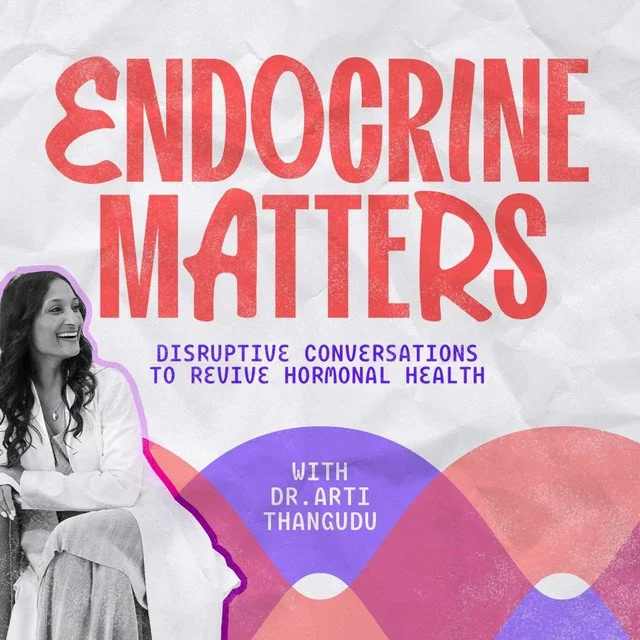
In this episode of Endocrine Matters, I break down the recent FDA actions involving desiccated thyroid extract (NDT), explains what the evidence actually says about combination T4/T3 therapy, and addresses one of the biggest problems in thyroid care today: the growing gap between legitimate patient frustration and online misinformation.
This was such an important topic to bring to the podcast. If you prefer to watch or listen, you can catch the full episode on my channel.
What Actually Happened With Armour Thyroid and NP Thyroid?
In August 2025, the FDA took enforcement action involving desiccated thyroid extract medications like:
Armour Thyroid
NP Thyroid
Various compounded thyroid preparations
These medications are derived from porcine (pig) thyroid glands and contain both T4 and T3 thyroid hormones.
The FDA reclassified these products as biologics due to their animal-derived composition and complex protein structure — which would require manufacturers to undergo a much more rigorous approval pathway called a Biologics License Application (BLA).
Naturally, this caused major concern among the roughly 1.5 million Americans taking these medications.
Then, months later, the FDA softened its enforcement approach, stating it would prioritize maintaining patient access while manufacturers worked toward compliance.
So what does this actually mean for patients?
Right now:
These medications are not disappearing overnight
Manufacturers are still producing them
Patients should not panic
However, the situation is still evolving, and insurance coverage changes are already happening.
Why CVS Caremark Removing NP Thyroid Matters
As of April 2026, CVS Caremark has removed NP Thyroid and several other desiccated thyroid medications from many formularies.
For patients, this may mean:
Higher out-of-pocket costs
Forced medication switches
Pharmacy substitutions without adequate medical conversations
There’s something incredibly important, that I wanted to emphasize on this topic:
A thyroid medication change should never be treated as a casual swap.
Different formulations absorb differently, contain different hormone ratios, and require careful monitoring and dose adjustments.
Why The Thyroid Conversation Online Has Become So Polarized
One of the most important parts of this episode is the nuanced discussion around persistent symptoms on levothyroxine.
Because here’s the truth:
Some patients truly do continue to struggle despite “normal” thyroid labs.
And many of those patients feel dismissed.
That frustration is real.
Unfortunately, the wellness industry has stepped into that gap with oversimplified narratives like:
“TSH is meaningless”
“Reverse T3 is blocking your hormones”
“Everyone needs T3”
“Endocrinologists are keeping patients sick”
The problem?
Most of these claims stretch legitimate science far beyond what evidence actually supports.
Does Combination T4/T3 Therapy Ever Make Sense?
This is where the conversation becomes more nuanced — and where I want to bring a balanced, evidence-based perspective.
The American Thyroid Association still considers levothyroxine (T4) the standard treatment for hypothyroidism.
However, newer consensus statements also acknowledge that:
Some patients continue to have symptoms despite adequate TSH levels
Certain individuals may have impaired T4-to-T3 conversion
Carefully monitored combination T4/T3 therapy may benefit select patients
That distinction matters.
Because there is a major difference between:
Evidence-based, physician-monitored low-dose T3 therapy
andOnline “thyroid optimization” protocols pushing excessive T3 dosing without appropriate oversight
In clinical practice, low-dose pharmaceutical-grade liothyronine (synthetic T3) may sometimes be added cautiously to levothyroxine in carefully selected patients.
But it requires:
Proper lab monitoring
Careful dosing
Ongoing assessment of symptoms and risks
Consideration of heart health and bone density
This is not a one-size-fits-all protocol.
The Risks of Too Much Thyroid Hormone Are Real
One of the most important parts of this episode is the discussion around the dangers of over-treatment.
Excess thyroid hormone — even mild excess — can increase the risk of:
Atrial fibrillation
Heart rhythm abnormalities
Bone loss
Osteoporosis
Fractures
Elevated heart rate and blood pressure
This becomes especially important for:
Perimenopausal women
Postmenopausal women
Patients with cardiovascular disease
Patients already at risk for osteoporosis
And yet these risks are often minimized or completely omitted in online “optimization” conversations.
Patients deserve both: validation for persistent symptoms and honest conversations about risk.
The Bigger Issue: Patients Want To Feel Heard
At its core, this episode is not just about thyroid medication.
It’s about trust.
Many thyroid patients feel:
unheard
dismissed
rushed through appointments
told their symptoms “must be something else”
And while some online wellness spaces exploit that vulnerability, the answer is not misinformation.
The answer is better medicine.
Medicine that:
listens carefully
evaluates the full clinical picture
considers other contributors like iron deficiency, sleep issues, insulin resistance, perimenopause, and vitamin deficiencies
and approaches thyroid care with nuance instead of extremes
The Bottom Line
There is no single “perfect” thyroid medication for every patient.
Levothyroxine works extremely well for many people.
Some patients may benefit from carefully monitored combination therapy.
But thyroid treatment should never be:
fear-based
algorithm-driven
sold through online marketing funnels
or managed without proper medical supervision
Your thyroid deserves individualized care — not internet extremism.
📍 Still have questions?
💬 Contact us and we'll be happy to help!
💌 Or join our newsletter to stay informed: Sign up here
FAQs
Is Armour Thyroid being discontinued?
Not at this time. The FDA has changed how it classifies desiccated thyroid extract (NDT) medications like Armour Thyroid and NP Thyroid, but these medications are still available while manufacturers work through regulatory requirements.
Why is NP Thyroid being removed from some insurance formularies?
Certain pharmacy benefit managers, including CVS Caremark, have removed NP Thyroid from coverage on some plans, which may increase out-of-pocket costs or require medication changes for some patients.
What is the difference between levothyroxine and Armour Thyroid?
Levothyroxine is synthetic T4 thyroid hormone, while Armour Thyroid and other NDT medications contain both T4 and T3 derived from porcine thyroid glands.
Does everyone with hypothyroidism need T3 therapy?
No. Many patients do very well on levothyroxine alone. However, some patients with persistent symptoms may benefit from carefully monitored combination T4/T3 therapy under physician supervision.
Is TSH still an important thyroid lab?
Yes. TSH remains the most validated and clinically useful marker we have for assessing thyroid hormone balance and thyroid replacement adequacy.
What is reverse T3?
Reverse T3 is an inactive metabolite of thyroid hormone. While it may rise during illness or physiologic stress, treating “high reverse T3” with aggressive T3 protocols is not currently supported by strong clinical evidence.
Can too much thyroid hormone be dangerous?
Absolutely. Excess thyroid hormone can increase the risk of:
Atrial fibrillation
Heart rhythm abnormalities
Bone loss and osteoporosis
Elevated blood pressure
Cardiovascular complications
Should I buy thyroid medication online without a prescription?
No. Ordering thyroid hormone from online wellness clinics or websites without appropriate physician oversight can be dangerous and may lead to unsafe dosing and monitoring.
